
$1,500 Fix, $15.2M Liability: Key Lessons for Local Councils on Risk Management
Date: 21 April 2026
Authors: Ellorie Mercer - Genuine People
A recent decision of the Supreme Court of Victoria provides a timely and sobering reminder of how far local councils are required to go when managing risk across their facilities, particularly where everyday, predictable user behaviour exposes councils to significant liability.
In Woolnough v Whittlesea City Council & anor [2026] VSC 190, Whittlesea City Council was ordered to pay $15.2 million in damages after its failure to install a $1,500 pedestrian gate contributed to a young man suffering catastrophic, life-altering injuries after falling whilst jumping over a boundary fence at a community sporting reserve. The case highlights how seemingly minor infrastructure oversights can crystallise into substantial liability exposure.
What Happened?
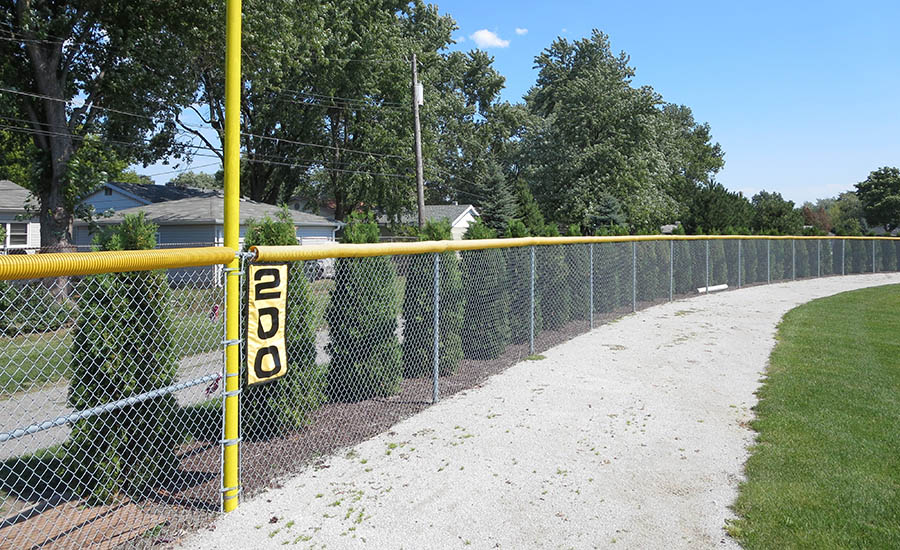
The Laurimar Cricket Club used the ovals and cricket nets at the Laurimar Recreation Reserve in Doreen for training. The Reserve was owned and operated by the Council, which had constructed a boundary fence around one of the ovals and adjoining cricket nets, but without any direct pedestrian access between the oval and the nets.
The Court heard that between 75% to 90% of the cricketers routinely jumped or climbed the fence at the most direct point, rather than walking the longer route between the oval and the nets. It was accepted that as early as October 2020, the Club asked the Council to provide an access point between the oval and the nets.
During cricket training on 15 February 2022, the plaintiff, who was only 23 years old, was jumping over the boundary fence to access the cricket nets when he caught his foot on the top of the fence and fell headfirst to the ground. He suffered catastrophic injuries and will spend the rest of his life in a wheelchair.
The plaintiff alleged that both the Council and Club were negligent in failing to provide an appropriate access point. Shortly after the accident, the Council installed a pedestrian access gate near the location of the fall at a cost of approximately $1,500.
The Council's Liability – Individual Risk vs Aggregate Risk
The Council's status as occupier and the existence of a relevant duty of care was not disputed. The key issue was whether the Council had breached that duty.
The Court's analysis turned on a critical distinction between individual risk and aggregate risk.
At an individual level, climbing or jumping over a fence on a single occasion poses a relatively low risk of injury for reasonably fit people. However, the Court emphasised that this risk looks very different if each of these single occasions are aggregated, and if every member of every team were to jump or climb over the fence before and after each game across multiple seasons.
The Council argued that it could not be expected to eliminate every minor risk across all of the many ovals and other facilities it managed in the municipality. The Court accepted that it would not be unreasonable for a council to do nothing to address the risk of injury to random individuals climbing fences at unpredictable locations.
However, because the Council had constructed two pieces of infrastructure adjacent to each other and it was expected that the intended users, the cricketers, would regularly move between them, it was reasonable to assume that the players would jump or climb the fence in the absence of a suitable access gate.
The Court concluded that the aggregate risk of injury, coupled with the:
- low cost of installing a pedestrian gate;
- frequency of the relevant behaviour or event; and
- foreseeability of the expected climbing or jumping,
meant a reasonable council would have installed a pedestrian gate when the new cricket nets were constructed.
The Club Was Not Liable
The plaintiff alleged that the Club was negligent for failing to advocate more strongly to Council for a gate and for failing to direct the players not to jump the fence.
The Court rejected these arguments and held that the claim against the Club failed.
The Club did not create the risk and did not have the authority to install one. It had notified Council that players were jumping or climbing over the fence and requested that a gate be installed and by doing so had discharged its obligation to act reasonably.
The Court also observed that it was reasonable for the Club to leave the decision whether or not to jump the fence to each individual adult player, and the Club had no greater expertise or ability to appreciate the risk of injury than the plaintiff did.
Should the Plaintiff's Claim be Reduced?
The Council argued that any damages should be reduced on the basis that the plaintiff had voluntarily assumed the risk of falling and injuring himself and/or was contributorily negligent by choosing to jump the fence.
The defence of voluntary assumption of risk failed, as the Court was not satisfied that the plaintiff appreciated the nature and extent of the risk, namely that he was exposing himself to the risk that he might become a quadriplegic.
However, the Court accepted that the plaintiff ran and attempted to vault over the fence without appreciably slowing down, thereby increasing the risk of a fall. On that basis, it was just and equitable to reduce his damages by 20%.
Learnings for Local Councils
- Consideration of aggregate risk is key: When managing council assets and associated risks, the relevant question is not whether one person faces a small risk of injury on a single occasion, but whether repeated, foreseeable behaviour by many users over time creates an unacceptable combined risk. Councils must assess risk holistically, across all potential uses, across all potential user bases and over time.
- Predictable human nature must be accounted for: Councils cannot design, manage or operate assets on the assumption that users will always take the safest available route, or choose the safest or most appropriate option. Where fence-jumping is the predictable human response to the absence of an access gate, that risk must be proactively addressed and mitigated in a timely manner.
- New construction requires holistic safety review: When the Council installed the new cricket nets, it should simultaneously have considered whether a pedestrian gate was needed to facilitate safe movement between those nets and the adjacent oval. When new construction alters usage or user movement patterns, councils must reassess how people will use the space and whether any additional safety measures are required.
- Cost of mitigation is critical: While the Council's post-accident installation of a modestly priced gate does not constitute an admission of negligence, it did establish that a cheap risk mitigation option was feasible. Where the cost of risk mitigation is minimal and the potential harm is real, courts will closely scrutinise any omission or inaction.
- Verbal risk reports must be recorded and escalated: The absence of a written record of the Club's requests for an access gate undermined the Council's position. To ensure that risks are properly identified and assessed, councils must ensure that all verbal requests or reports of hazards are accurately documented and evaluated in accordance with a defined risk framework.
- Safety concerns must not be misclassified as matters of convenience: While the extent to which the Club's requests made it clear that the lack of a gate was a safety issue rather than a matter of convenience, there was evidence that had the request been treated as a genuine safety issue, the access gate could have been installed within a couple of weeks. Timely action to address a safety concern may have entirely avoided the plaintiff's devastating accident.
Key Takeaway
Woolnough v Whittlesea City Council demonstrates what is expected of a local council when managing its risks, and how significant liability can arise not from dramatic failures but from modest and easily overlooked infrastructure gaps. The absence of a $1,500 pedestrian gate resulted in a $15.2 million judgment and, far more significantly, catastrophic injuries to a young man who will spend the rest of his life in a wheelchair.
Councils must adopt a risk-mitigation approach that reflects how facilities are actually used, not merely how they are intended to be used. Where predictable patterns of behaviour give rise to a foreseeable aggregate risk, timely and proportionate action is critical. This requires councils to have both a bird's-eye view of the interplay between different risk factors, and an appropriate and robust risk management framework.
If you would like advice regarding the implications of this significant decision or on managing liability risk in your organisation, please contact one of our insurance and local government experts.
This article is intended as general legal commentary only and does not constitute legal advice. Readers should seek specific advice in relation to their particular circumstances.

Profile