
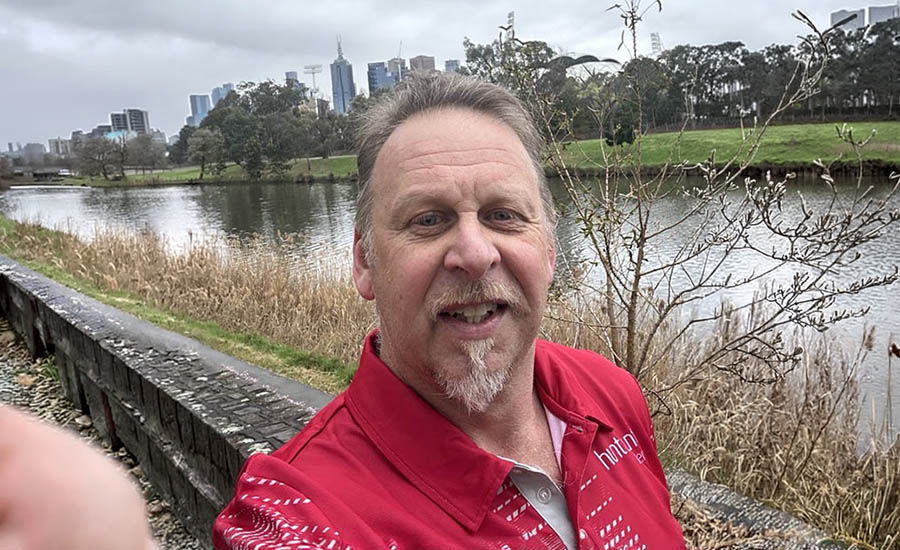
Meet Tony Raunic – The Bike-Riding Mayor of Hunt & Hunt
Date: 01 January 2026
Authors: Tony Raunic, Andrew Clarke - Genuine People
If you want to understand Tony Raunic, you start in Ballarat.
“I was born in Ballarat, a big regional town, sure, but still country in the way it thinks,” he says. “You grow up knowing who the major businesses are, who employs half the town, who’s doing well and who’s struggling. You get perspective early.”
And you learn quickly that language matters.
“Country people are very plain speaking. They don’t like people hiding behind fancy words. If you start talking in professional shorthand, legalese, abbreviations, jargon, they’ll pull you down pretty quickly and say, ‘Just give it to me straight.’”
It is not nostalgia talking. It is an operating philosophy.
“When I first came to the city, I realised how direct country speech can sound. But I’ve tried to maintain that. In business, especially in law, why wouldn’t you be clear? What harm is there in being better understood?”
He pauses, then sharpens the point.
“If you can’t put something in simple terms, you probably don’t understand it properly yourself. Translating legal concepts into plain English takes more thinking, not less. You’ve got to really understand the legal meaning before you can find the simple equivalent.”
From the edge of town to the inner north
For decades, Tony lived on Melbourne’s fringe in Doreen, raising four children with space around them.
“We were about 40 kilometres out. A bit of land. A bit of distance. It was a great place to raise kids.”
But as those children grew up and moved out, life recalibrated.
“We found ourselves travelling into the city a lot anyway, for work, for restaurants, for coffee. So we thought, why not shift closer?”
Now based in Fairfield, Tony has swapped long drives for handlebars.
“I love riding my bike into the office. Even today, the roads were wet, but as long as it’s not pouring rain, I’m happy.”
He grins.
“You exercise without thinking about it because it’s just a commute. And frankly, it’s as fast as the train.”
The border collie, Remy, required adjustment.
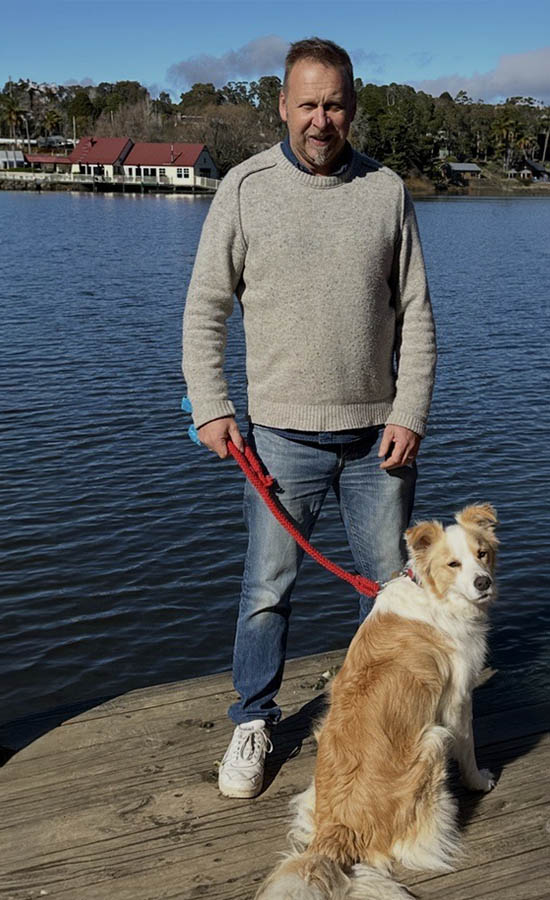
“He loves open space. Loves to run. So he needs to be walked a lot, and he is. But I’ve probably got more time to walk him in the evenings now. There’s plenty to explore. He’s adapted.”
The country never really leaves
Despite the city shift, Tony maintains a base in Hepburn Springs.
“We’ve got a place there, about an acre. It’s an old tumble-down house we’ve been slowly doing up. There’s always something to fix.”
It is more than a renovation project.
“It’s a centre point for the family. Adult children, grandchildren, we all gather there. I often catch up with clients in that area, too. And because I act for local governments across regional Victoria, it’s actually a very practical base.”
Then comes the admission, delivered with satisfaction:
“There’s nothing like chopping wood. It’s cathartic. Swinging an axe and splitting wood for the fire, it’s satisfying in a way that’s hard to explain.”
And yes, he still rides up there.
“One of my favourite rides is from Hepburn to Castlemaine. About 25 kilometres. I’ll stop at the Railway Hotel, maybe have a beverage, then ride back. The 57-year-old legs feel it, but that’s part of it.”
The accidental Mayor
Tony’s move into local government began not with ambition, but involvement.
“I was president of the local kindergarten association, that’s where my eldest daughter went. Once you start engaging with council through community organisations, you begin to think about the role of the council. Are they doing this as well as they could? What could you contribute?”
He was elected to the council in 1999.
“I was pretty young. Late twenties, early thirties. I became Deputy Mayor fairly quickly, then Mayor in my second term.”
The experience was formative.
“You learn about volunteers, the people who quietly make things happen. The couple who drive the aged care bus voluntarily. The Scout leader. The Landcare volunteers. That was an eye-opener.”
It also ignited a professional focus.
“I gravitated towards governance. Because you see how important it is. If people on a board or council can’t relate properly, if they can’t manage disagreement constructively, it can be destructive.”
That insight now informs his legal practice.
“When a council sells land, for example, it’s not just about getting the right price. You have to demonstrate to the community that you’ve achieved best value. You’ve got to show the process was sound. A private landowner can just accept an offer. A council can’t operate like that.”
The difference is accountability.
“And having been a councillor and Mayor, I understand the pressures. The stakeholders. The scrutiny. That practical experience is invaluable when advising councils.”
Governance matters
Tony’s governance lens extends beyond councils. He served on the board of a Bendigo Community Bank franchise, helping establish several branches across the north-east corridor.
“It’s community money. Community asset. You’ve got to get governance right.”
And not just in the obvious sense.
“It’s not only about preventing someone from stealing money. It’s about demonstrating that the systems are robust. That there’s probity. That best value is being achieved. Governance isn’t box-ticking, it’s trust.”
From Mayor to Managing Principal
The parallels between council chambers and law firm leadership are not lost on him.
“Within a firm of our size, you’ve got diverse views. Different skill sets. Passionate people who are very good at arguing their case.”
A diplomat’s smile crosses his face.
“When I’m chairing our leadership meetings, I often reflect on chairing council meetings. There’s a similarity. You’ve got to make sure the loudest voices don’t dominate. Everyone needs the opportunity to speak. But you also have an agenda, you can’t spend all day on one issue.”
He enjoys the responsibility.
“I wouldn’t do it if I didn’t enjoy it. At this stage of life, you can’t be successful at something if you’re not enjoying it.”
Tony describes himself as more extroverted than the stereotype of the document-bound lawyer.
“I’m not the lawyer who sits in an office generating terms and conditions all day. There’s nothing wrong with that, but I wouldn’t enjoy it. I get energy from people.”
That energy is evident at industry events.
“I find it exciting to meet someone new and think, what can I learn from this person? People are sometimes apologetic, ‘I don’t have this degree, I don’t have that experience’, but everyone can teach you something.”
He likens those conversations to studying a map before a journey.
“You might not follow the same route as someone else, but at least you know where they stopped along the way. It makes the road ahead less unknown.”
Adjusting the dial
There is a quiet pragmatism underpinning Tony’s career.
“You can make drastic career changes if you’re unhappy. But sometimes you don’t need to leave the profession, you just adjust the dial.”
He gestures as if turning an old stereo knob.
“You stay within the career, but you adjust how you perform it. Maybe you move closer to the people side. Maybe you focus more on governance. It doesn’t always have to be a complete reinvention.”
Keep it straight
If there is a single thread that ties Ballarat to Fairfield, council chambers to boardrooms, it is this:
“Give it to people straight.”
In an industry that can sometimes mistake complexity for sophistication, Tony’s approach is refreshingly direct.
“Why wouldn’t we always communicate clearly? Why wouldn’t we always aim to be understood?”
It’s a country instinct, sharpened by decades of practice, now steering a national law firm.
And most mornings, it arrives at the office on two wheels.
```
Profile
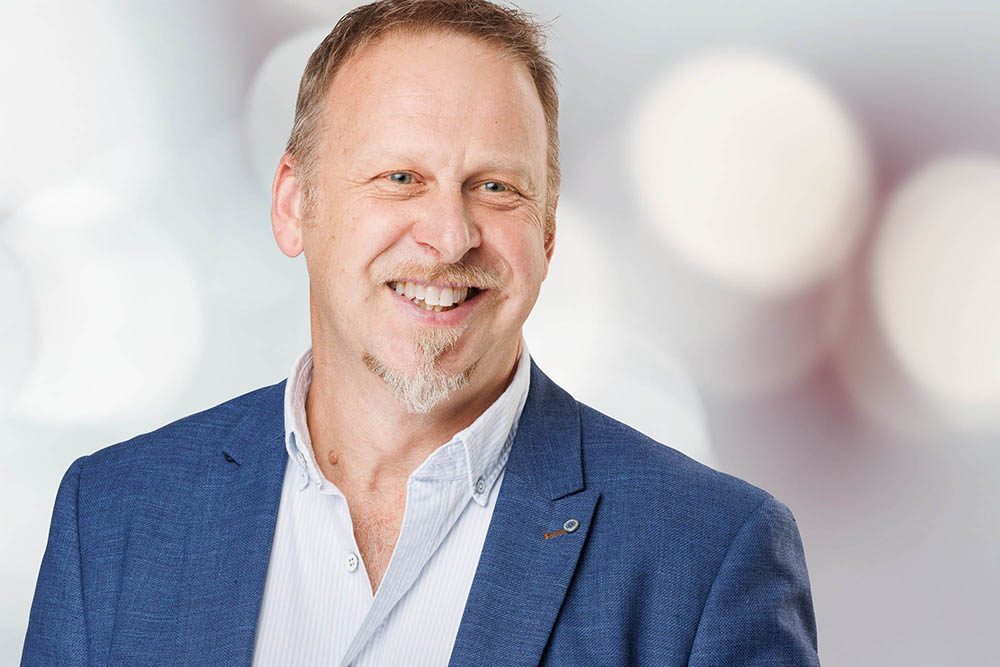
Tony Raunic
Profile