
Replenishing the Land Bank: Lessons from the Manor Lakes Case
Date: 22 January 2026
Authors: Anna Shaw - Genuine People
While the market value of the acquired land is usually the headline figure in a compulsory acquisition compensation claim, the secondary costs of acquisition, such as stamp duty on replacement land, can spark significant legal battles.
The Secretary to the Department of Economic Development, Jobs, Transport and Resources v Manor Lakes (Werribee) Pty Ltd [2016] VSC 358 litigation, spanning a notable 2016 Supreme Court decision and a 2017 Court of Appeal judgment, provides the definitive roadmap for how "disturbance" compensation works for developers in Victoria.
The Background: A Railway Through a Development
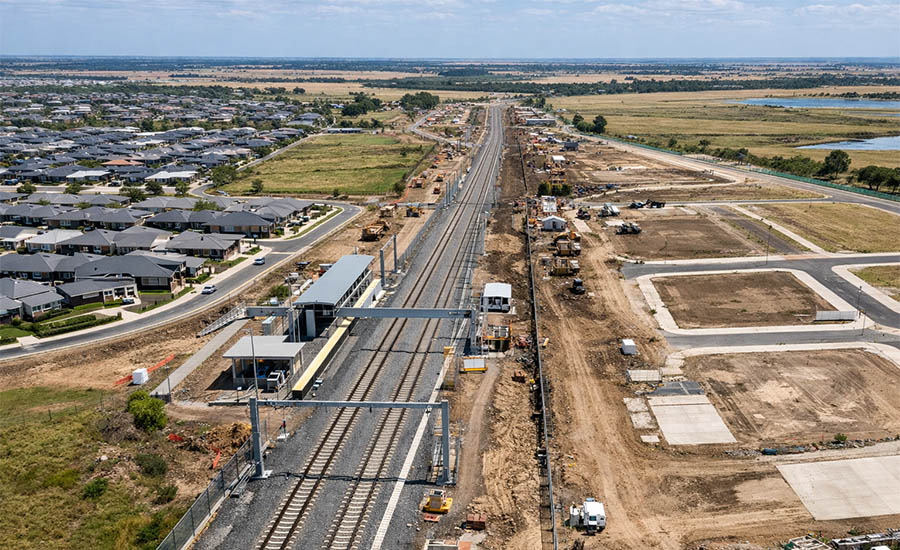
The case arose from the Regional Rail Link Project ("RRL"), which required the compulsory acquisition of land in Wyndham Vale owned by Manor Lakes (Werribee) Pty Ltd ("MLW") and Manor Lakes Commercial Company Pty Ltd ("MCC"). Both companies are part of the Dennis Family Group, which was developing the Manor Lakes Estate, a massive residential and commercial subdivision.
The Authority acquired several parcels of land for the rail corridor and a station. While the market value of the land was eventually agreed upon (totalling over $12 million for MLW and $6.9 million for MCC), a dispute remained: was the Authority liable to pay for the stamp duty and registration fees the developers incurred when purchasing replacement land?
The "Stock in Trade" Principle
Under the Land Acquisition and Compensation Act 1986 (Vic) ("LAC Act"), a claimant is entitled to compensation for "loss attributable to disturbance". This is defined as any pecuniary loss suffered as a "natural, direct and reasonable consequence" of the acquisition.
The Authority argued that because MLW was a developer, the land was essentially "stock" meant for sale. They contended that the purchase costs of the original land were "sunk costs" and that MLW would be fully compensated by receiving the market value.
However, Emerton J in the Supreme Court rejected this "sunk costs" thesis. Drawing on established authority, she held that a developer’s land is their "stock in trade". When a developer is deprived of this stock, they must replenish it to continue their business. Therefore, the costs associated with buying replacement land – specifically including stamp duty – are a compensable loss, because the developer cannot simply buy their way back into their original position without incurring these government charges.
The "Inevitable Purchase" Challenge
One of the most interesting facets of the case was the Authority’s argument regarding causation. MLW had pre-existing options to purchase the land it eventually used as "replacement land" from a related entity, MGP. The Authority argued that because MLW would have bought this land anyway, the acquisition was not the "direct" cause of the purchase; it merely moved the purchase date forward.
The Court of Appeal upheld Emerton J’s finding that the acquisition was the direct cause. The evidence showed that the acquisition forced MLW to buy the western land "out of sequence" and earlier than planned to maintain a continuous supply of developable lots. The court clarified that whether a consequence is "direct" is a question of fact. Because the acquisition disrupted the planned staging of the development, the decision to purchase the replacement land was not an independent investment but a necessary response to the loss of stock.
The Section 41(2) Bar: Potential vs. Actual Use
The most technical hurdle in the case was Section 41(2) of the LAC Act. This section is designed to prevent "double recovery". It states that if land is valued based on its potential use (e.g. residential subdivision) rather than its actual use at the date of acquisition (e.g. vacant land/farming), the claimant cannot recover disturbance losses that would have been "necessarily incurred" in realizing that potential.
The Authority argued that since the land was valued as a residential subdivision but was currently vacant, MLW was getting the "potential" value and thus should not get disturbance costs.
At the trial level, Emerton J found that the "use" of the land was "holding it for subdivision," which meant the "actual use" and "potential use" were the same. The Court of Appeal refined this. They held that while the land was indeed valued on its potential, the Authority still lost on this point for a simple reason: stamp duty on replacement land is not a cost incurred in realising the potential of the acquired land.
Section 41(2)(b) only bars losses incurred to make the original land ready for its new use. The costs of buying new land to continue a business are a separate matter entirely and do not constitute double dipping.
Calculating Equivalence: The Teford Rule
The Court also addressed how much replacement land a developer can claim. In the earlier Teford case, it was established that a claimant cannot buy a much more expensive property and expect the Authority to pay the full stamp duty.
In this case, MLW bought replacement land that was much larger in area than the land taken. However, the court allowed MLW to claim stamp duty based on a notional portion of the new land that was equivalent in value to the land taken.
The MCC Claim: Future Costs
A final point of note was the claim by MCC, which had not yet purchased replacement land at the time of the trial. The Court allowed MCC to recover estimated future stamp duty because they demonstrated they were "in the process of being incurred". MCC showed they had obtained a Capital Gains Tax rollover ruling and had a "paper trail" of properties they had investigated. This shows that a claimant does not necessarily need to have settled on a new property before the court can award compensation for the anticipated costs.
Conclusion
The Manor Lakes case is a landmark victory for developers. It confirms that land banks are "stock in trade" and that the friction costs of replenishing that stock, including stamp duty, are a direct consequence of compulsory acquisition. For authorities, the case serves as a reminder that the "potential use" bar in Section 41(2) has limits and will not easily defeat a legitimate claim for the costs of business continuity.
For the property industry, it underscores the importance of maintaining clear development plans and staging sequences; it was this evidence that ultimately proved the "direct" causal link between the government's taking and the developer's subsequent purchase.

Profile