
The 'Double Compensation' Safeguard: Unpacking the Jomaring Decision
Date: 19 January 2026
Authors: Anna Shaw - Genuine People
Compulsory land acquisition frequently marks a significant clash between historical planning decisions and modern infrastructure needs. For practitioners and landowners in Victoria, a definitive ruling by the Victorian Court of Appeal in Jomaring Pty Ltd v Head, Transport for Victoria VSCA 128 has clarified a long-standing tension: how to account for compensation paid decades before the State acquires the land.
The judgment serves as a vital anchor for the principle of equivalence: the foundational concept that an owner should be paid neither more nor less than their actual loss. It ensures that while landowners are fully indemnified, they do not receive a windfall at the public’s expense.
The Forty-Year Preamble
The story of the Jomaring case began in 1979, when a large parcel of land at 260 Centre Dandenong Road, Dingley, was reserved for a proposed main road. At that time, the land was owned by the family of David Ronald Kingston, who is the sole director of Jomaring Pty Ltd.
In 1984, the previous owners (Mr Kingston’s father and aunt) successfully claimed 'reservation compensation', also known as planning blight compensation, under the Town and Country Planning Act 1961 ('TCP Act'). These payments were substantial, representing between 92% and 96% of the land's value in 1984. Effectively, the State had already compensated the owners for the fact that the road reservation had stripped the land of its industrial development potential.
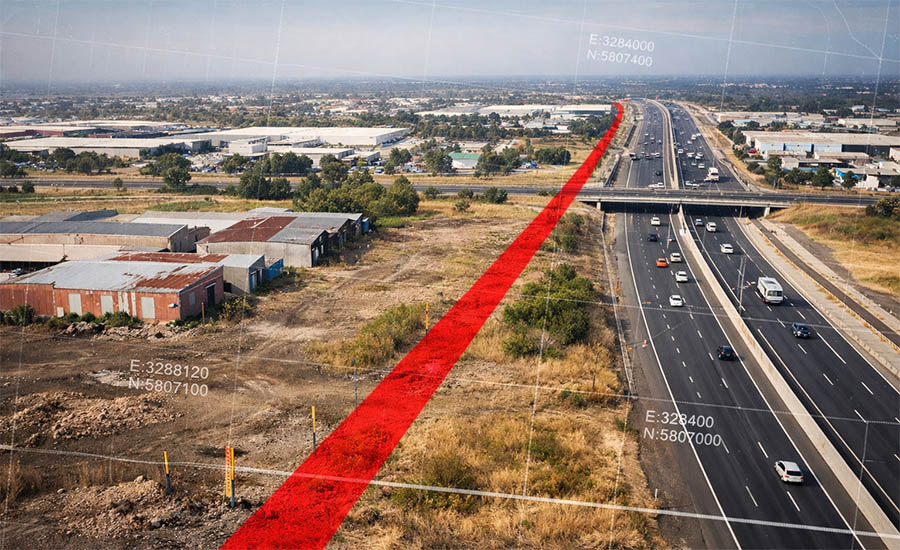
Decades of relative silence followed until March 2019, when the Roads Corporation (now Head, Transport for Victoria) officially acquired the land for the Mordialloc Freeway. Mr Kingston and Jomaring sought over $1.1 million each, prompting an appeal centred on technical legal 'gateways'.
The Statutory Gateway: Does the Act 'Match'?
The first major conflict concerned the wording of Section 41(5) of the Land Acquisition and Compensation Act 1986 ('LAC Act'). This section mandates that if compensation was previously paid pursuant to Part 5 of the Planning and Environment Act 1987 ('PE Act'), the current acquisition compensation must be reduced by a 'prescribed amount'.
The applicants pursued a technical argument: their 1984 compensation was paid under the old TCP Act, not the PE Act. The PE Act did not commence until 1988. The applicants contended that since the payment was not made 'pursuant to' the specific act mentioned in Section 41(5) of the LAC Act, the reduction formula could not be triggered. Notably, while Section 41(5) originally referred to the TCP Act when the LAC Act was passed in 1986, it was amended in 1988 to refer to the PE Act.
The Court of Appeal rejected this narrow view, favouring a purposive approach. Critically, the Court held that the conclusion flowed from the proper construction of Section 41(5) itself. They ruled that 'pursuant to' should be read broadly as 'in accordance with' or 'conformable with'. Because the PE Act was a 'total overhaul' and re-enactment of the compensation provisions found in the TCP Act, the 1984 payments were considered conformable with the modern regime.
As a secondary pathway, the Court also affirmed that Section 16(b) of the Interpretation of Legislation Act 1984 applied. This 'savings provision' ensures that things done under a repealed law (like the 1984 payment) continue to have legal effect as if they were done under the new act. To hold otherwise would result in 'irrationality and absurdity', allowing owners paid under the old system to 'double dip' while those paid under the new system were restricted.
The Mathematical Dispute: Solving for 'Value B' and 'Value C'
Once the Court decided a reduction was necessary, they had to apply the formula in Section 41(7) of the LAC Act. The formula, which is (A / B) x C, is designed to ensure the deduction is proportional to the original 'slice' of value the State already purchased. The values can essentially be defined as follows:
- A. The amount of compensation previously paid.
- B. The market value of the land in respect of which the compensation was paid, determined on the basis of the actual zoning that applied at the date which was the basis for the calculation of that compensation.
- C. The compensation payable for market value and severance, minus the value of durable improvements made either with the consent of the Authority under section 12(1)(b) or after the last date on which compensation was paid.
The applicants argued the formula was 'incapable of application' regarding the 'B' value. They pointed out that in 1984, the land was reserved for a road and was technically 'unzoned'. If 'B' required an 'actual zoning' that did not exist, they claimed the math failed.
The Court of Appeal dismissed this 'literalist trap'. They determined that 'actual zoning' in this context refers to the zoning that was actually used as the basis for the original compensation calculation. In 1984, the valuers had used a 'Garden Industrial' zoning as their baseline. By using this same baseline as the 'B' value, the formula correctly identified that the State had already paid for the land's development potential.
The Court noted that this interpretation was consistent with legislative history. While the LAC Act originally referred to 'underlying zoning,' Section 41(7) was amended to its current form (referring to 'actual zoning') in 2006 to update terminology without intending to alter the formula's operation or create a loophole for reserved land.
The Legacy of Jomaring
This decision reinforces that reservation compensation is not merely a historical footnote; it is a permanent purchase of a portion of the land's value. When the 1984 payment was made, the State effectively bought the 'development potential' of the land. By 2019, the owners were only entitled to be paid for what they still held—the physical land itself, stripped of that potential, often called the 'residual or carcass value'.
The Jomaring case ensures that the Victorian compensation regime remains a closed loop. It prevents technical changes in legislative titles from being used to bypass the requirement that the public should not have to pay for the same blade of grass twice.

Profile