
The 'Sparrovale' Settlement: Understanding Land Valuation in the Perkins VCAT Case
Date: 19 January 2026
Authors: Anna Shaw, Anton Dunhill - Genuine People
Compulsory land acquisition is one of the most significant intersections between private property rights and public necessity. In Victoria, this process is governed by the Land Acquisition and Compensation Act 1986 ("LAC Act"), which seeks to establish a clear procedure for acquisition and a consistent framework for determining the compensation payable to those whose interests are divested or diminished. While the law does not use the term "just" compensation, it mandates a rigorous assessment of market value and other specific losses to ensure landowners are compensated according to established legal principles.
The recent decision in Greater Geelong City Council v Perkins (Land Valuation) [2025] VCAT 856 provides a detailed study of how these principles are applied when there is a massive discrepancy between a landowner's expectations and a government authority’s offer.
The Background: A Family Legacy at "Sparrovale"
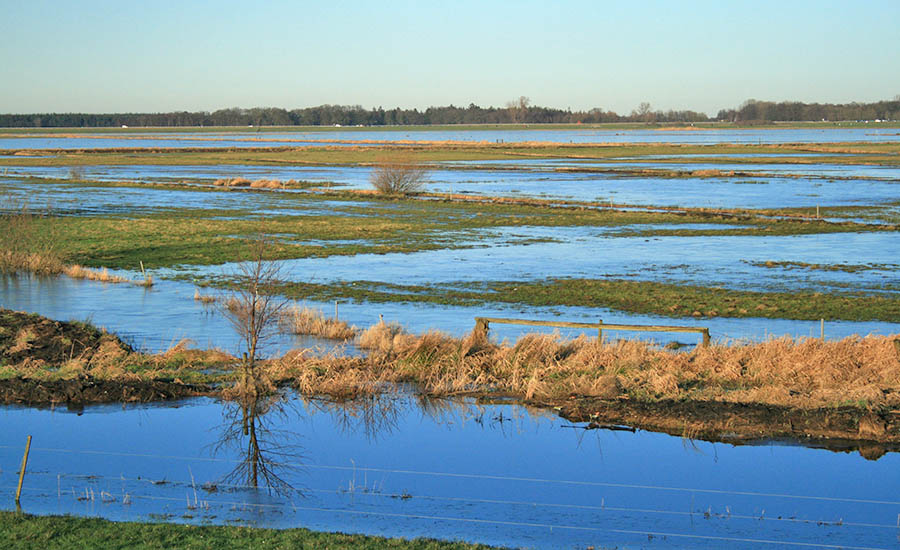
The dispute centred on a 419.2-hectare property known as "Sparrovale" in Charlemont, Victoria. The land had a deep family history: it was purchased by Claude Perkins in 1952 and farmed until the mid-1970s. In 1990, ownership transferred to his son, Graham Perkins. For over six decades, the family operated a successful fat lamb and vealer business, utilising Graham’s intimate knowledge of the land’s unique hydrology.
In February 2019, the Greater Geelong City Council ("Council") officially acquired the land for the purpose of drainage infrastructure and associated conservation. The goal was to manage stormwater from the nearby Armstrong Creek urban growth area while establishing a significant conservation reserve.
The Valuation Conflict: Farmland or "Drainage Land"?
The primary issue before the Victorian Civil and Administrative Tribunal ("VCAT") was the determination of market value under Section 41(1)(a) of the LAC Act. The gap between the two parties was vast: Mr. Perkins initially claimed $64.3 million, compared to Council's initial offer of $7.76 million.
This discrepancy stemmed from a disagreement over the property’s "Highest and Best Use", being the most profitable use for which the land is physically adapted and legally permitted.
- The Landowner’s Perspective: Mr. Perkins argued that because Sparrovale was the natural low point of the region, its highest and best use was as "drainage land" to serve the surrounding urban growth. His valuers used a "novel" methodology, claiming developers would pay a 50% premium because using Sparrovale for drainage would "free up" more valuable residential land within the growth area.
- The Council’s Perspective: The Council maintained that the land was flood-prone farmland. They argued that any "special" value for drainage only existed because of the Council's specific regional project, which the law requires valuers to ignore.
The Statutory Bar: Section 43 of the LAC Act
In determining the award, the Tribunal had to navigate Section 43(1) of the LAC Act, which places strict limits on what can influence a valuation.
Section 43(1)(a) mandates that any increase or decrease in market value arising from the "proposal to carry out the purpose" of the acquisition must be disregarded. Furthermore, Section 43(1)(b) requires valuers to ignore any "special suitability" of the land for a purpose that can only be achieved through legal powers held by a public authority.
The Tribunal found the respondent's "drainage land" theory to be unreliable and theoretical. They ruled that a developer consortium was unlikely to form and pay such a premium, especially since the ongoing operation of a regional drainage scheme would inevitably require the involvement of the Council as the drainage authority. To value the land based on the Council's specific need for it would create an impermissible "ransom value".
The Final Award Breakdown
The Tribunal ultimately determined that the total compensation payable was $8,455,991.59. The award was categorized into four distinct "heads of claim" under the LAC Act:
- Market Value ($7,550,000): While VCAT rejected the $64 million claim, it also found the Council’s lowest estimates too conservative. The Tribunal recognized that 14.8 hectares (Scenario A land) bordered the urban growth boundary and had long-term rezoning potential, warranting a premium over standard farmland rates. The remainder of the land was valued as a mix of high-quality and lower-quality farmland.
- Disturbance Loss ($310,323.08): Under Section 41(1)(d), a claimant is entitled to pecuniary losses that are a "natural, direct, and reasonable consequence" of the acquisition. This award covered the specific costs Mr. Perkins incurred in purchasing two replacement properties to continue his farming livelihood.
- Professional Expenses ($245,668.51): Landowners can recover legal and valuation fees under Section 41(1)(f) if they are "necessarily incurred". The Tribunal allowed most of these but disallowed fees for a valuation report that was rejected by the respondent himself and never advanced as part of the legal claim.
- Solatium ($350,000): Solatium is a discretionary payment (capped at 10% of market value) for "intangible and non-pecuniary disadvantages". The Tribunal awarded a substantial amount here, noting that the "dark hand of acquisition" had loomed over the property since 2012, causing years of uncertainty and distress for the family. They also acknowledged the profound emotional impact of losing a home and farm that had been in the family for over 60 years.
Why This Case Matters
The Perkins case underscores that in Victorian acquisition law, market evidence is the ultimate authority. While a property may have unique physical attributes, those attributes cannot be used to demand a premium based on "hypothetical" consortiums or "innovative" valuation theories that have no basis in real-world transactions.
For practitioners and landowners alike, the lesson is clear: compensation is rooted in what a willing but not anxious purchaser would pay on the open market, independent of the government’s specific plans for the site.

Profile
Anna Shaw

Profile