
When Does "Sold" Mean Sold? The Timing of Compensation Claims after Plunkett
Date: 22 January 2026
Authors: Anna Shaw - Genuine People
In Victoria, unilaterally imposed planning blights are a significant source of tension between private landowners and state authorities. This phenomenon arises when land is reserved for a public purpose, such as for a future road duplication or public open space, via a Public Acquisition Overlay ("PAO"). While ownership of the land does not change hands when a PAO is applied, the value of the land is typically diminished.
Part 5 of the Planning and Environment Act 1987 ("P&E Act") provides a statutory mechanism for owners selling blighted property to claim compensation for any financial loss on the "sale of the land". In Plunkett v Roads Corporation [2019] VSC 39, the Supreme Court of Victoria has now provided crucial clarity on how to interpret this phrase.
The Substantive Dispute: A Question of Three Dates
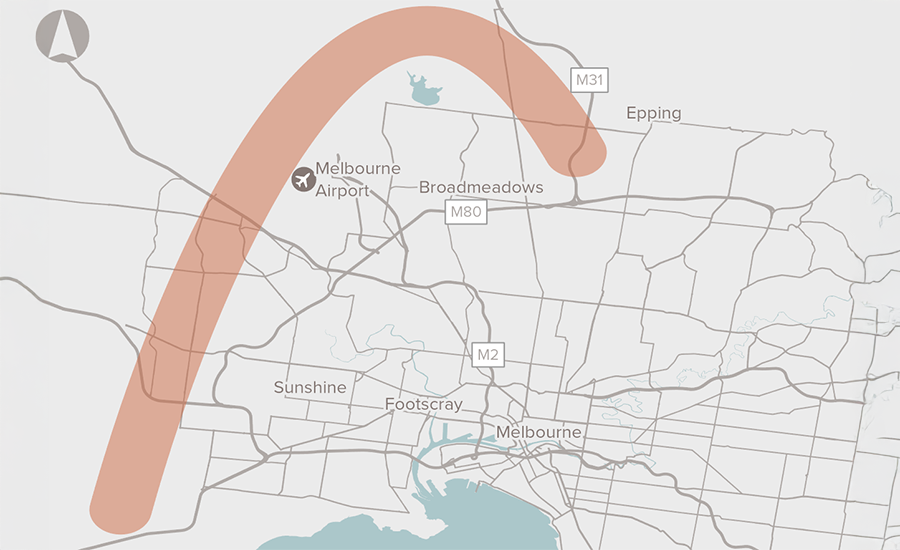
Kevin and Dorothy Plunkett owned land in Mickleham that had been affected by a PAO for the Outer Metropolitan Ring/E6 Transport Corridor since 2010. Seeking to realise a compensation right under section 98(1)(a) of the P&E Act, they sold the property in 2017. The litigation centred on three distinct milestones in that transaction:
- 10 May 2017: The parties signed a binding contract of sale.
- 17 October 2017: Settlement occurred, and the balance of the purchase price was paid.
- 14 December 2017: The transfer of title was registered on the Register of Titles.
The Plunketts lodged their compensation claim on 17 July 2017, which was after the contract was signed but before settlement had been effected. Roads Corporation, the responsible authority ("the Authority"), rejected the claim as premature, arguing that the "sale" had not yet occurred.
The Court was tasked with the question: at which of these three points does the "sale of the land" occur, for the purposes of sections 99 and 106 of the P&E Act?
The Rival Interpretations
The Plunketts contended that a sale occurs upon the first milestone: the parties entering into a binding contract. They argued that once a contract is signed, the equitable interest passes to the purchaser, and the vendor’s rights are fundamentally altered. This view was thought to be supported by the colloquial understanding of "selling" a home.
The Authority initially argued that a sale is not legally complete until the registration of the transfer, being the third milestone. This argument relied on the principles of the Torrens system, where legal title only passes upon registration.
The Ruling: Settlement as the "Trigger"
Justice Richards rejected both positions, holding that the "sale of the land" occurs upon the completion of the contract, being settlement (the second milestone).
The Court’s reasoning was anchored in the underlying philosophy of Part 5 of the P&E Act. Unlike compulsory acquisition, where the state takes land and pays immediately, Part 5 compensation is deferred until an owner suffers a "concrete or tangible loss". Justice Richards concluded that until settlement, the loss remains merely prospective and contingent. If a contract falls through before settlement, the owner still retains the land and has not suffered the final financial "hit" of a reduced sale price.
Furthermore, for Torrens land, the Court noted that once a vendor provides a signed transfer at settlement, they have done everything required; they become a bare trustee for the purchaser, who is then "entitled to be registered" as the proprietor. Under the P&E Act’s own definitions, such a person is considered an "owner".
The Costs Judgment: Discretion Over Presumption
Following the first judgment, which effectively vindicated the Authority's view that the Plunketts' initial claim was premature, a second battle emerged regarding legal costs (Plunkett (No 2)).
The Plunketts argued that there is a presumption in land compensation cases that a claimant should receive their costs, as they are essentially seeking a "just" price for a loss imposed by the state.
Justice Richards explicitly rejected this, clarifying the application of Section 91 of the Land Acquisition and Compensation Act 1986 ("LAC Act"), which applies to P&E Act claims via section 105. The Court held that:
- No Presumption Exists: Section 91 of the LAC Act does not mandate that claimants get their costs; rather, it gives the Court broad discretion to award costs "as it thinks proper".
- Timing of Costs: Because the "date of sale" was a separate question intended to streamline the trial, the Court declined to award costs to either side immediately.
- Outcome: The Court ordered that the costs of the separate question be "costs in the proceeding". This means the successful party of the overall compensation case will likely recover these costs, but only after the final award is compared to any offers made by the Authority, as required by section 91(1)(a) of the LAC Act.
Practical Implications for Landowners
The Plunkett decisions provide a clear roadmap for anyone dealing with loss on sale compensation claim. Timing is not merely a detail; it is a jurisdictional requirement.
- Notice Requirements: Under section 106(1)(b) of the P&E Act, owners must give the responsible authority at least 60 days' notice of their intention to sell. The Plunkett ruling confirms this notice should ideally be given 60 days before the anticipated settlement, rather than the contract date.
- Valuation Date: The date of settlement is now the definitive valuation date for assessing the "affected" and "unaffected" value of the land to calculate the compensation cap under section 104 of the P&E Act.
- Limitation Periods: Potential claimants must remember that under section 37(2) of the LAC Act, they generally have two years from the date the right to claim arises (now settled as the date of settlement) to commence proceedings.
- Litigation Conduct: The rejection of a costs presumption means that claimants who pursue "unreasonable" legal interpretations or excessive claims do so at significant financial risk.

Profile