
Get to know Luke Mackay: an unconventional path to litigation
Date: 02 July 2026
Author: Andrew Clarke - Genuine People
Luke Mackay has been promoted to Senior Associate at Hunt & Hunt, marking the next step in a legal career that began by a very unconventional route.
His road to litigation began a long way from courtrooms, contracts and construction disputes.
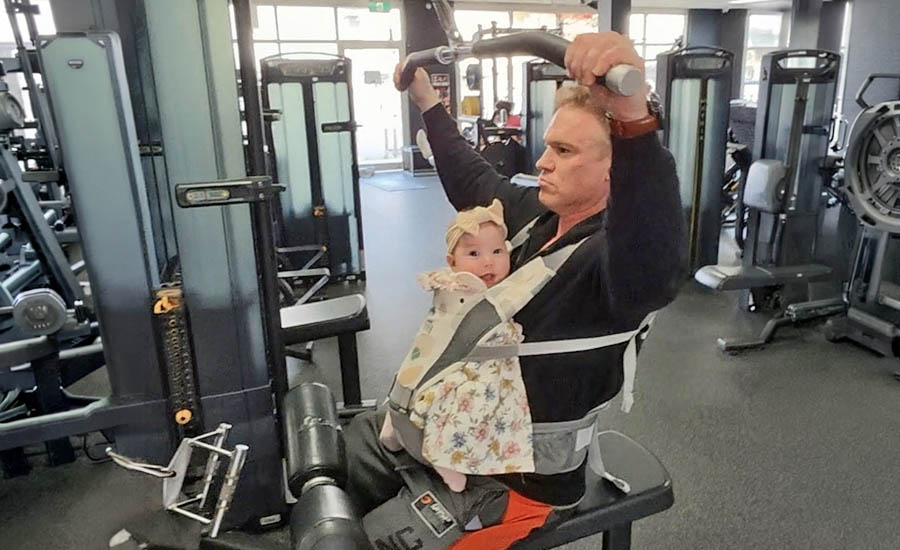
Before law, Luke worked as a personal trainer. It was practical work, but also personal. People came to him with goals that were often easy to describe and harder to achieve. His job was to listen, understand what they wanted and help them turn intention into something structured and achievable.
Years later, Luke sees a thread between that work and what he does now.
“The work is obviously very different, but the focus on people and solutions has stayed with me,” Luke said. “Whether you are working with someone on their fitness or helping a client through a dispute, you need to understand what they are trying to achieve and help them take the next step.”
Luke did not arrive in law by the usual route. In his late twenties, a hiking accident left him with a serious leg injury and a long recovery. It was a difficult interruption, but it also gave him time to think about what came next.
“I had a long period of recovery,” Luke said. “In that time, I decided to return to study and found myself studying law. I haven’t looked back since.”
The change suited him. Litigation has its own kind of pressure. It requires judgement, discipline and the ability to make sense of competing issues quickly. Clients are often dealing with more than a legal problem. There may be money at stake, a business relationship under strain, a project at risk or a decision that needs to be made before all the facts are comfortably in place.
That is part of what Luke enjoys about it.
“What I like about litigation is that the answer is rarely one-dimensional,” he said. “You might have a legal argument, but you also have timing, cost, evidence, leverage and the client’s appetite for risk. The challenge is bringing those things together in a way that helps the client make the next decision.”

Luke works across a broad range of commercial disputes, including contractual disputes, insolvency-related matters, financial disputes, construction disputes and Security of Payment Act claims.
The work can be technical, but Luke is interested in what the dispute means for the client in real terms. A broken contract may affect trading relationships. A debt dispute may affect cash flow. An insolvency issue may force difficult choices about recovery, enforcement or settlement. The law matters, but so do timing, leverage and commercial reality.
“Most disputes are messier than they first look,” he said. “There may be legal issues, but there are also commercial pressures, timing questions and relationships to manage. The role is to work out what matters, explain the options clearly and help the client make a decision.”
Luke has developed particular experience in construction and Security of Payment Act matters, where momentum often matters as much as the argument itself. Payment disputes in construction are rarely isolated. When money stops moving, the shocks can quickly reverberate through the contracting chain.
“In construction disputes, timing can be everything,” Luke said. “If payment is delayed, the impact can move quickly through the contracting chain. It can affect a business’s ability to pay workers, purchase materials and keep projects moving.”
That immediacy appeals to Luke. It is an area where careful advice can make a tangible difference, particularly for businesses managing cash flow, project commitments and the risk of a dispute escalating.
He is also conscious that good litigation advice is not just about taking every available point. Sometimes it means being direct with a client about risk. Other times it means identifying the moment when a negotiated outcome is better than a prolonged fight. Often, it means helping a client make a decision under pressure without losing sight of the bigger picture.
“Clients want clear advice and a path towards their goal,” he said. “That means being direct about the risks but focused on what can be done commercially and practically.”
Luke joined Hunt & Hunt a little over two years ago and says the firm has been a strong fit. He has valued the range of work, the experience within the litigation team and the ability to draw on other practice areas when a client’s problem does not sit neatly in one category.
“One thing I’ve appreciated at Hunt & Hunt is that you are not working in a narrow lane,” Luke said. “In litigation, an issue can start in one place and quickly involve insolvency, property, employment or broader commercial advice. Having that experience around you makes a real difference.”
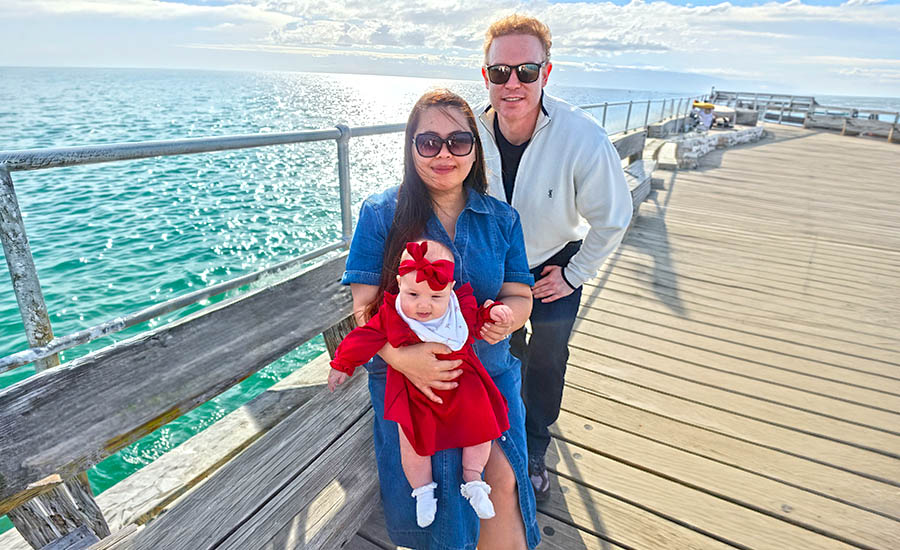
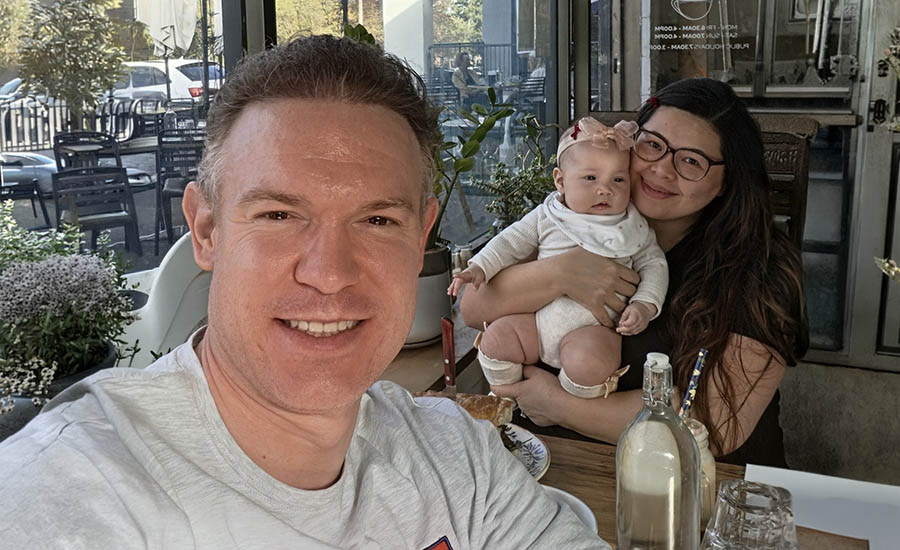
The firm’s support has also mattered during a period of personal change. Luke and his partner, Chao-yi, recently welcomed their daughter, Amelia. Parenthood has added another layer to the balancing act familiar to many lawyers, but Luke speaks about it with perspective rather than complaint.
“Hunt & Hunt has been very supportive as I’ve adjusted to life as a new parent,” Luke said. “There is always a balance to find, but having that support makes a real difference.”
Fitness remains part of his routine. It connects him with his earlier career and gives him a way to manage the demands of practice. Work, family and training each ask for consistency in different ways, and Luke says each of them keeps him grounded.
“There is a lot of energy that I draw from my work, my family and personal fitness,” he said. “They each require consistency, and they each keep me grounded in different ways.”
As Luke takes on the role of Senior Associate, his focus remains steady. He wants clients to feel that their problem has been properly understood, their options have been explained in plain terms and the next decision is one they can make with confidence.
“My aim is to provide value to clients when they need it most,” Luke said. “That means identifying the issues honestly, keeping the outcome in view and working out the most practical way to get there.”
For Luke, that is the work: understanding what is really at stake, giving advice that can be acted on and helping the client make the next decision with confidence.